How do you choose the right roof tent for your car?
Choosing a roof tent/rooftoptent seems simple at first: you find a model you like, put it on your car, and you're ready for adventure. However, many people quickly discover that there is more to it than that. Not because roof tents are complicated – far from it – but because every car, every use, and every traveller has different requirements. Some people want to set up quickly, others are looking for maximum space for a family, and still others want to be able to travel compactly and lightly. In this article, we explain what you really need to look out for when choosing a rooftoptent for your car. No technical hassle, just practical tips from real-life experience, so you can be sure you're making the right choice for many years of camping fun.
1. It starts with your car: roof racks, load capacity and installation
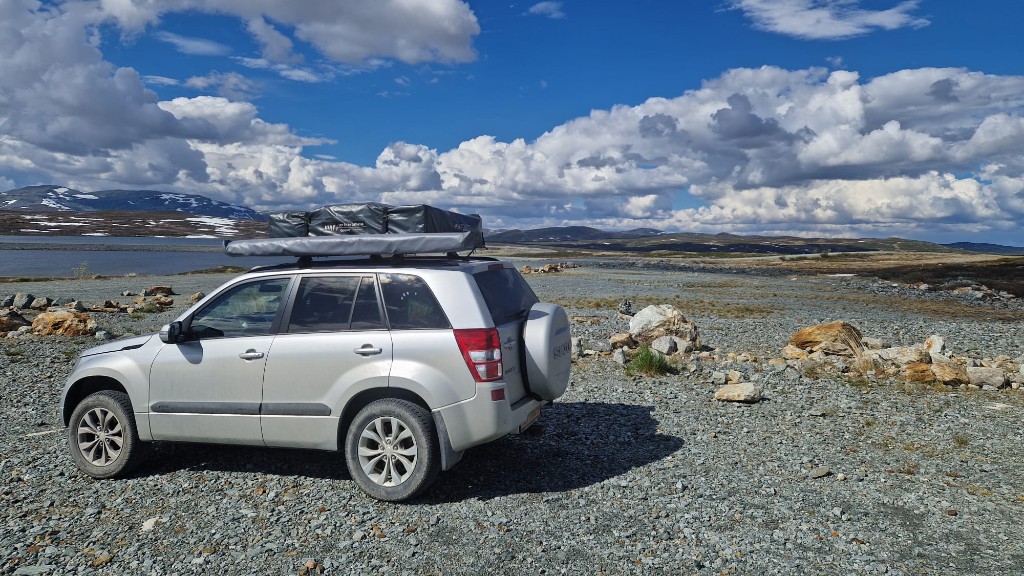
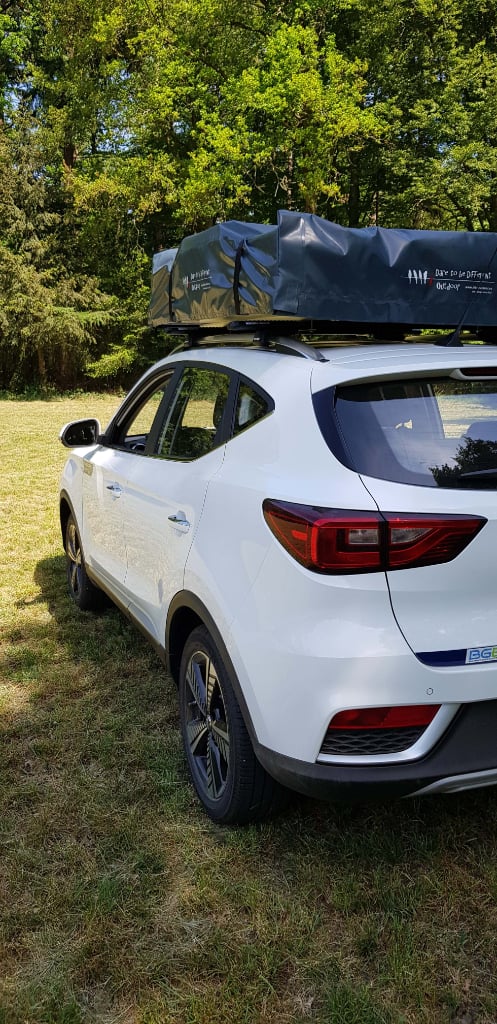
Before you fall in love with a specific model of rooftoptent, it is wise to first take a look at your car. Not every roof tent fits every car. The most important thing to check is the dynamic load capacity of your roof. This is the maximum weight your car can carry while driving. Most cars are between 50 and 100 kilograms, which is more than enough for most softshell roof tents. Hardtops are often a bit heavier, and for those you sometimes need a car or van with a higher load capacity. It is also important that you have good roof racks – sturdy, certified and with a T-slot or clamp attachment that fits your car. A roof tent is secured to the racks, so it is carried entirely by them. Therefore, do not rely on cheap equipment. If in doubt, ask for advice. The wrong rack is asking for trouble, while the right combination will last for years without any hassle.
The width of your car and the type of roof rack also play a role. Do you drive a compact SUV, an estate car or a large van? The wider and longer the vehicle, the more choice you have. Large cars can easily carry a roof tent that offers extra living space when unfolded, while smaller cars benefit from compact models. This prevents the tent from sticking out or becoming unstable. In short: it all starts with the basics – and that is your car.
2. Usage and travel behaviour determine which type of roof tent is right for you
Once you know what your car can handle, the next question is: how are you going to use your roof tent? Do you travel often, do you like to visit multiple destinations in one day, or do you just like everything to be set up quickly? Then a hard shell might be the solution. And yes, a hard shell is a little quicker to set up – but don't expect a world of difference. In practice, we are talking about seconds or at most a minute faster than a good softshell. The convenience lies mainly in the system: lift the lid, and you are ready to go. But does it really save time? Not really.
What you do need to seriously consider is the weight. Hardshells are usually a lot heavier. So the first question is what your car can carry on the roof. This can be a decisive factor, especially for more compact cars or SUVs. Softshells, on the other hand, are lighter and therefore a safer and more flexible choice for many cars – and often more spacious too.
And then there's the question of aerodynamics. Hardshells look sleek and streamlined, and they undoubtedly look neat on your roof. But in terms of fuel consumption, don't expect miracles. In practice, the fuel consumption of a car with a softshell or hardshell is virtually the same. The shape mainly makes a difference in terms of appearance, not in how economically you drive.
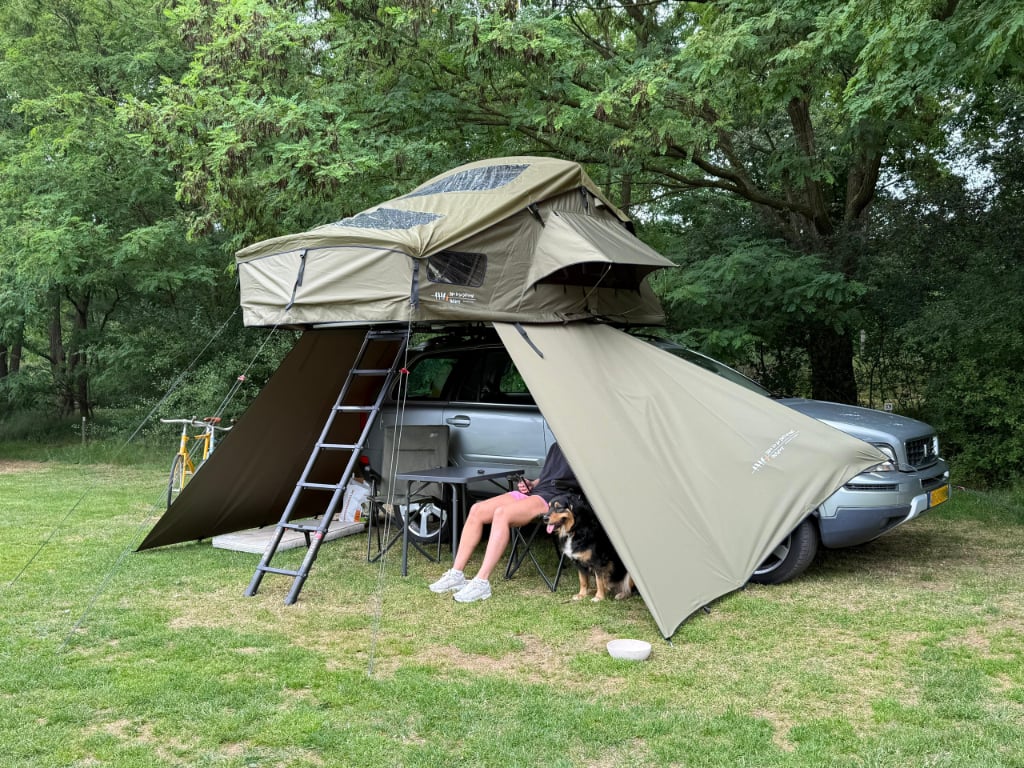
For family trips or multi-day road trips, an annex or awning can make a world of difference. They provide extra living space where you can sit dry, cook or store your belongings. Especially in countries where the weather can change quickly, this makes your trip just that little bit more comfortable. It is often a personal choice, but think carefully about your habits beforehand. The more you understand your own usage situation, the easier it will be to choose the perfect tent.
In short: don't choose 'hard or soft' because someone says it's faster or more economical. Look at how you travel, how often you go on the road and what your car can handle. That will ultimately determine which tent suits you best.
3. Space, comfort and materials: the details that make the difference
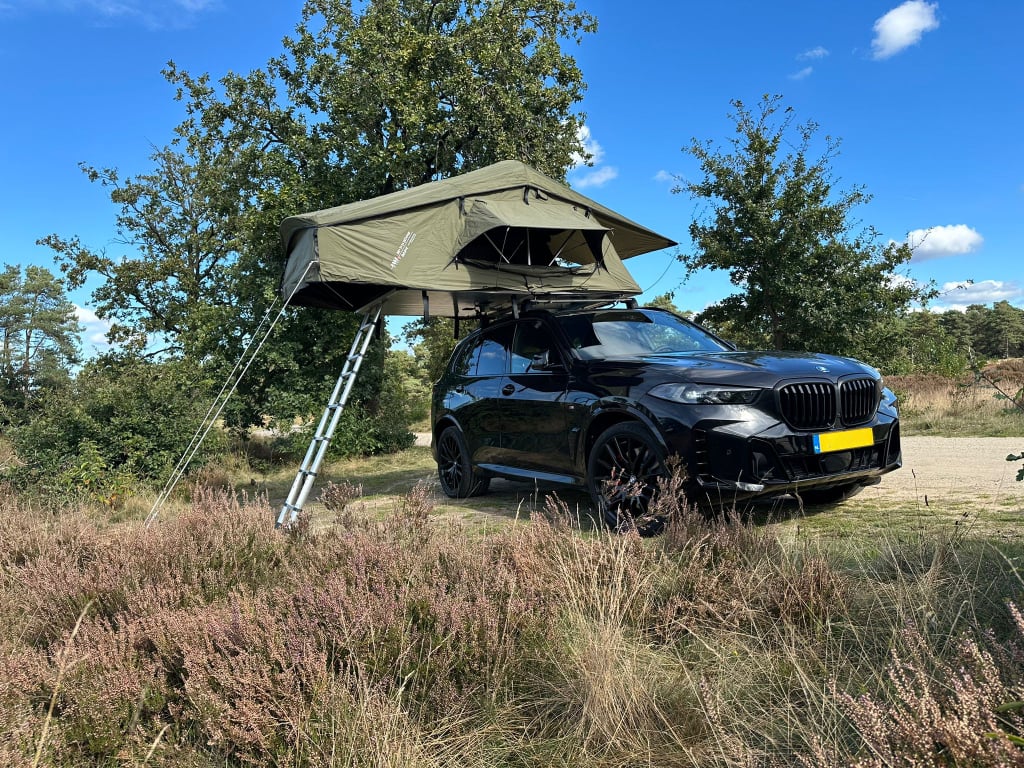
A roof tent is a purchase you make for years of use, so it is wise to pay close attention to the materials, finish and comfort that a tent offers. The tent fabric must be sturdy, waterproof and durable — it must be able to withstand wind, rain and sun without any problems. The mattress is also an important part: a good mattress determines how you wake up, especially during longer trips. A roof tent should be comfortable to sleep in, not feel like a makeshift solution.
However, there is one point that many people forget: the actual bed length and how it suits your own height. For example, if you are 1.85 metres or taller, you want to avoid having your feet against the fabric or the tent wall. Not only is this uncomfortable to sleep in, but it can also cause extra cold and condensation. And be aware: this happens faster than you think. In almost all cases, you sleep with a pillow, which automatically pushes you slightly further forward and therefore requires more bed length than the size on paper suggests. A tent with an internal length of 210 cm often seems sufficient, but with a pillow and a slightly curved sleeping position, there is less space left than you think.
Good ventilation is also important. Sufficient ventilation openings and smart window constructions ensure that the tent stays fresh and condensation is kept to a minimum. Furthermore, sturdy zips, a solid ladder and handy storage nets are small details that make a big difference to the user experience in practice. They may seem unimportant, but you use them every day — and you quickly notice the difference between 'good enough' and real quality.
4. What should you bring? Accessories to complete your roof tent
A roof tent is fantastic in itself, but with the right accessories, your setup will be truly complete. Many travellers start with just the tent and realise during their first trips that they would like some extra space or comfort. An awning, for example, is ideal for long trips: it creates shade, shelter from the rain and a nice place to cook or relax. An annex turns your vehicle and roof tent into one large living space, perfect for families or people who want a little more privacy. In addition, accessories such as a storage bag for shoes, insulated inner tent, or Chuckbox are useful for intensive use.
If you regularly travel with a roof tent, you know how quickly routines develop: where do you put your things, how do you set up camp, where do you cook? The better your accessories suit your way of camping, the more enjoyable your trip will be. That's why it's always wise to consider which additions make the most sense for your type of trip.
Verdict: choosing the right roof tent is easier than you think
Choosing a rooftoptent doesn't have to be complicated. If you know what your car can do, how you travel and what you consider important in terms of comfort and quality, you will naturally find a model that suits you perfectly. A rooftoptent is an investment in freedom: within minutes, you can be in the most beautiful places, without the hassle of tent poles or wet ground. With the right preparation, you can enjoy years of adventure, comfort and the great outdoors. Whether you travel alone, as a couple or with the whole family, there is always a roof tent that perfectly suits your way of exploring.