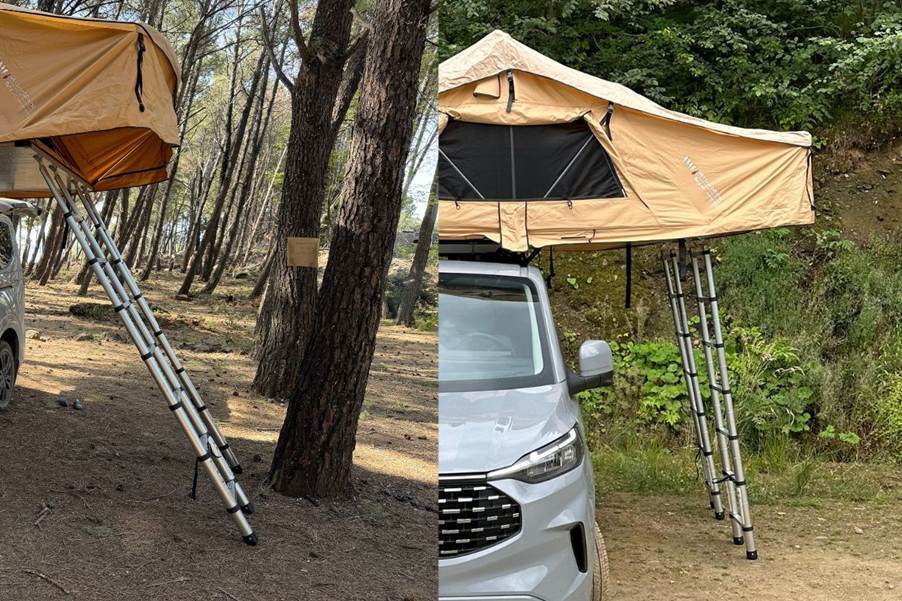
The excitement we felt before using the tent for the first time is hard to describe in words. I felt like a child who was given a toy/present that they were not allowed to use until next morning. The anticipation was unbearable. The moment of truth finally arrived 15 days after the delivery – we were about to start our vacation in Bosnia and Herzegovina. Everything seemed simple to us, you mount it on the roof, open it at the location and settle in – a piece of cake! Over time, we also made mistakes, fortunately we corrected them in time and avoided those small mistakes from becoming a big problem. In this blog, I will list the 5 most common ones (yes, we made them all).
Unstable ladders
We parked and opened the tent, without thinking about what the ground was like next to the car. That was exactly how our first pitch was, we learned this lesson quickly since it was about wild camping. Parking in the forest, and it had rained the day before. And these are real situations; very rarely will you be greeted by asphalt/concrete or a perfectly flat surface because you want to go into nature. This does not mean that gravel, grass, dirt or a slope are obstacles to setting up a roof tent.
The ladder is part of the structure and carries part of the weight of the tent and the people in it. When it is not stable, it will wobble when climbing and be unstable for children, but also for adults. The most dangerous thing is that it can slip and the tent can collapse. Don't worry, this can be easily avoided!
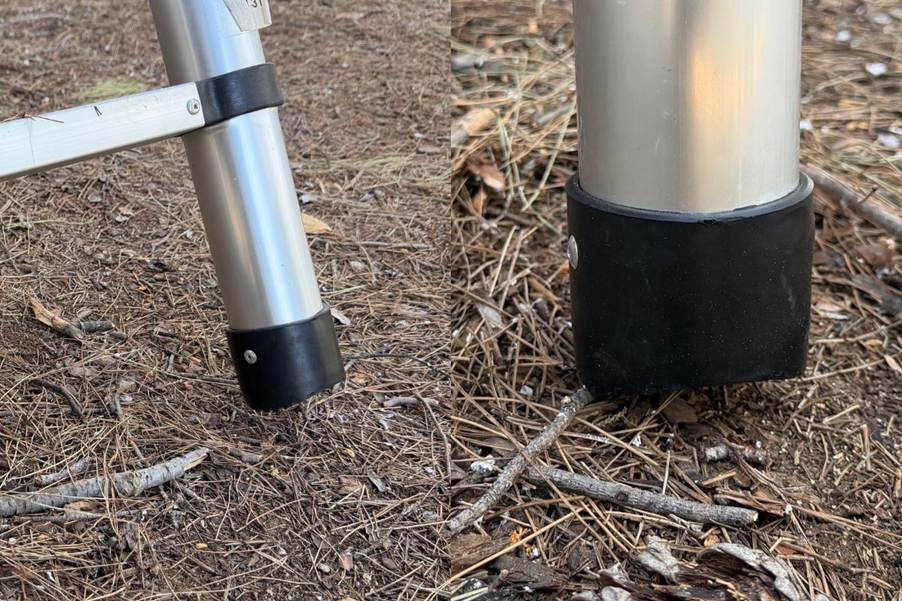
Always check the ground before setting up, look at where the ladder will approximately come to and if there is anything that could interfere with it, such as a puddle, hole, stone... if there is, it is better to move the car a little rather than adjust the position. Use a flat and solid surface, and if absolutely necessary, you can place a board or something similar under the ladder.
The most important thing is that the ladder does not move (it may move a little) when you try to move it by hand or while you are climbing.
Wrong angle of the ladder
This error is related to the previous one. There are two options, a ladder that is too steep and a ladder that is too low. The problem with a ladder that is too steep is the safety of climbing and descending because it is more difficult and unsafe, especially for children. A ladder that is too low can lead to instability of the tent. In both cases, the weight is not distributed properly and creates additional stress on the tent and the joints.
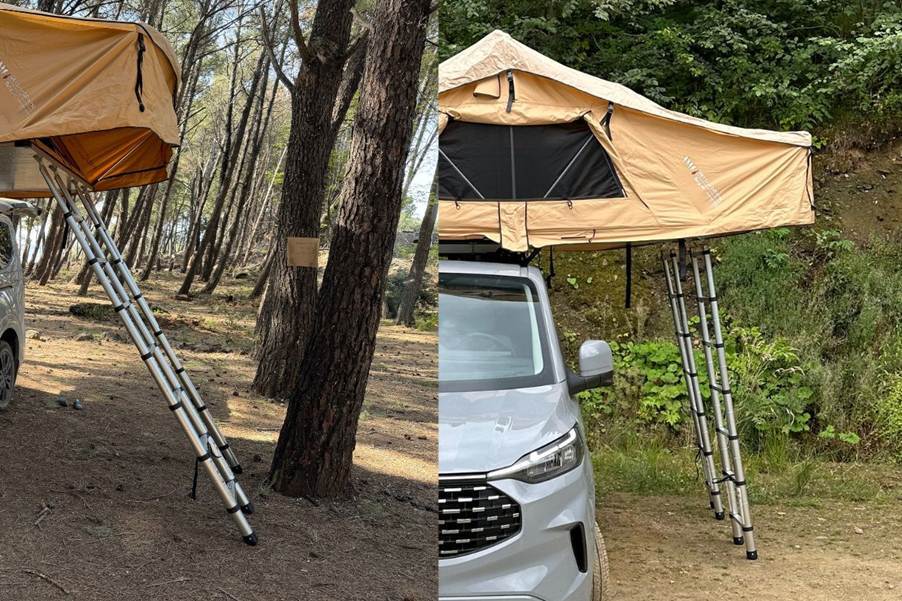
The ladder should be placed at a natural angle, like a regular ladder, around 65° - 75° in relation to the ground. To achieve this, adjust the length of the ladder, not just the position of the car. The easiest check is that you can climb it without straining your posture and that it does not look like a deck chair.
Condensation
The cooler nights of autumn led us to a new mistake. In the morning we woke up with droplets on the outer walls of the tent. 5 of us in the tent, outside about 10° C and all the windows closed. Two small ventilation holes were enough to have air through the night, but not to prevent condensation.
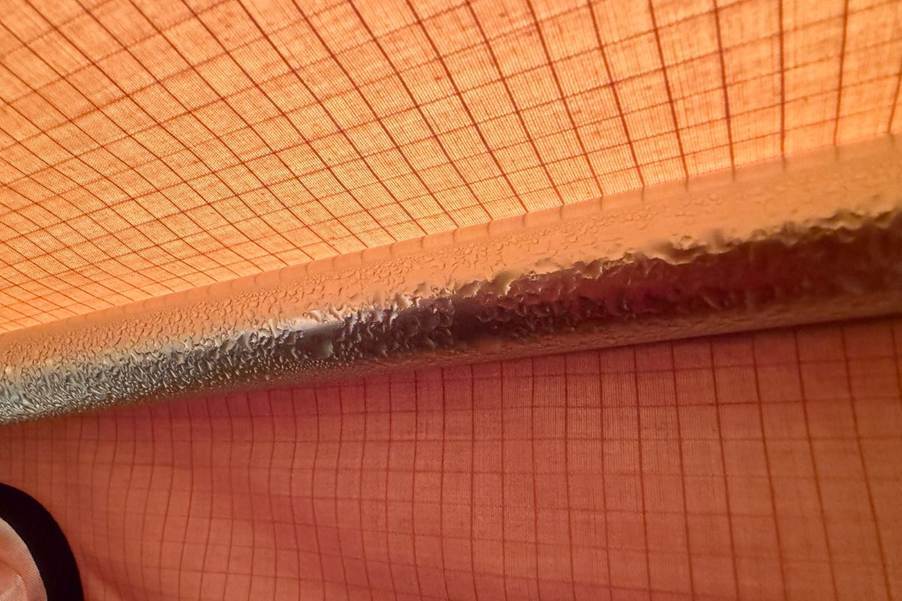
Breathing and the difference in temperature between the outside and inside air leads to humidity, and a roof tent is a small enclosed space. Our 220XL has an 8mm anti-condensation undermattress that reduced the amount of condensation. The problem with condensation occurs if the mattress and material remain damp and are folded as long as the humidity will lead to mildew.
The easiest solution is to always leave minimal ventilation; the number of open windows is adjusted to the number of people inside and the outside temperature. Even with two opposite windows slightly open, we never felt cold in the tent. If condensation does occur, it is best to wipe off the droplets and leave it to air out in the morning.
Folding a wet/damp tent
Sometimes the forecast changes at the last minute and you have no choice but to fold a wet or damp tent. Once folded and sealed in its transport cover, it will not dry out on its own. A closed and dark space combined with moisture is a winning combination for mildew growth. In addition to mildew being unhealthy and leaving an unpleasant odour, it can damage materials in the long run.
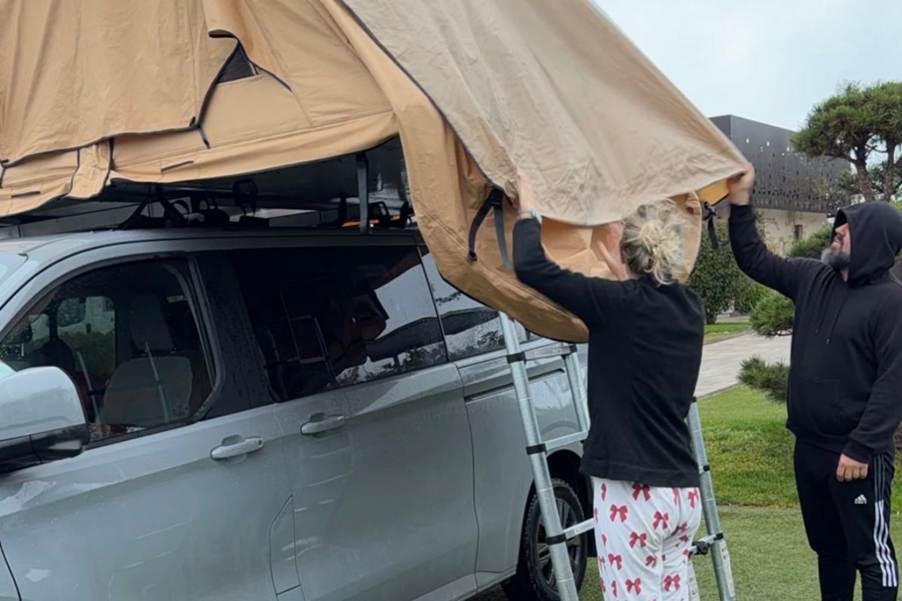
This is not an insoluble problem either, ideally it would be best not to close the tent until it is completely dry, but we all know that sometimes that is not possible. In case the tent is closed while it is still damp or wet, the most important thing is to open it within 48 hours and let it dry. In addition to the fabric, it is important that the mattress is also dry.
Forgetting to check bolts and assembly
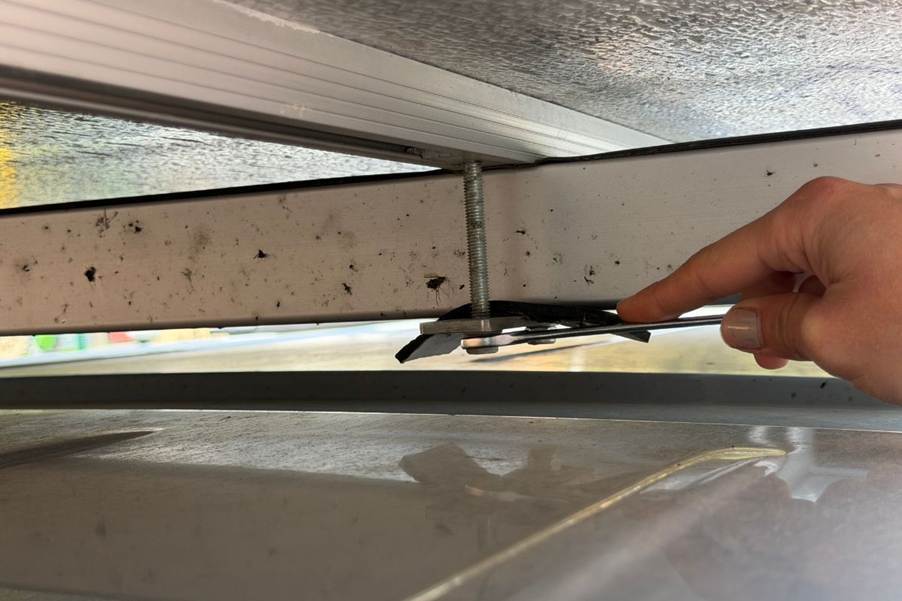
Maybe you're like me and think that once it's mounted on the roof, you're safe until you take it off. That's not entirely true, you need to check from time to time if everything is still firmly mounted. Resistance and vibrations while driving can loosen the bolts, which can be a major safety issue. The solution is a short check that only takes 1-2 minutes. It must be done after the first few rides after installation and after longer rides or rides on poor roads (e.g. gravel, lots of potholes). We also like to check the bolts before every camping trip to be completely safe.
A roof tent is not complicated, but it does require a little attention – like everything in life. If you want to make sure your tent lasts as long as possible, you need to take care of it a little. All of these mistakes are common, but they can be fixed. The difference between a stressful camping trip and a relaxing experience is in the little things like preventing these mistakes. I hope this blog has helped you! Happy adventures!