Why an awning for your rooftoptent gives you so much extra living space
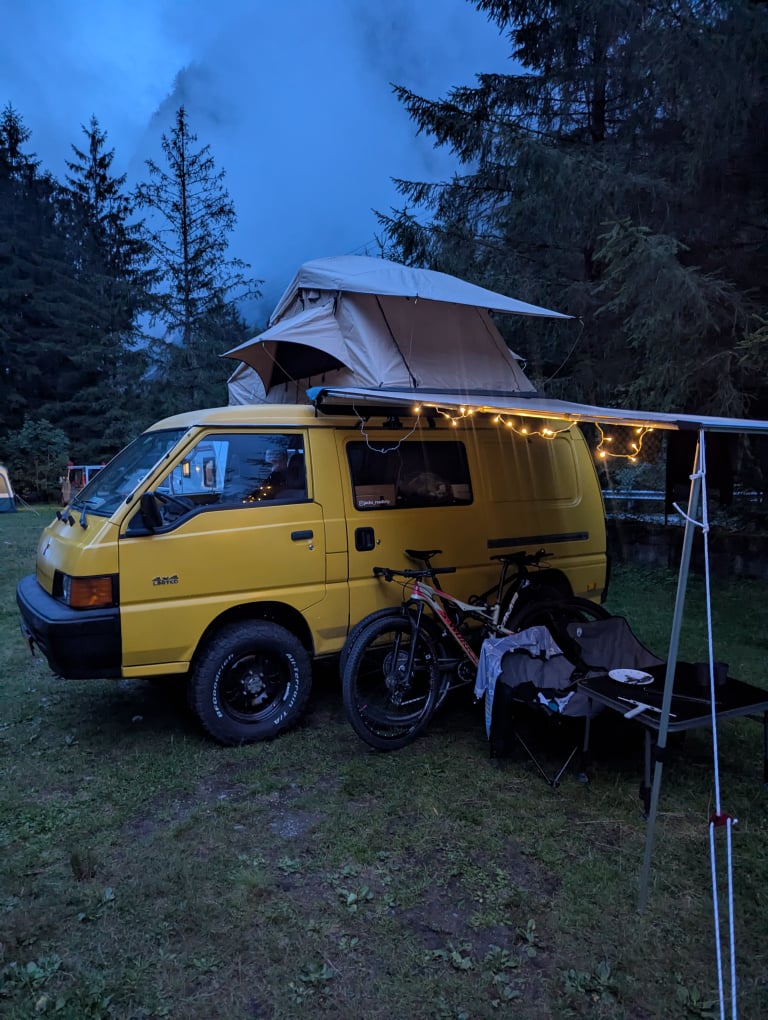
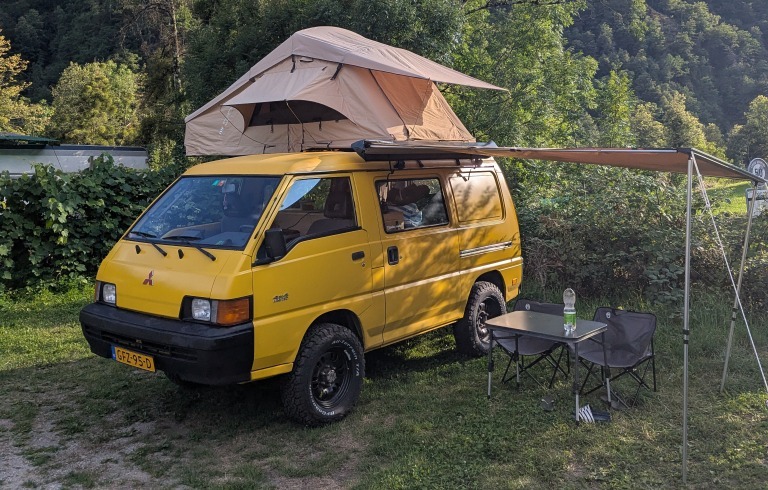
A rooftoptent turns your car into a fully-fledged camping vehicle, but adding an awning takes your setup to the next level. Whilst the rooftop tent primarily provides a comfortable place to sleep, an awning creates the living space around it: a place to cook, sit, store things out of the rain, or simply relax in the shelter next to your vehicle. In this article, we explain why an awning is such a valuable addition, what types are available — from separate awnings and sliding wall/awning combinations to self-supporting awnings — and what to look out for when choosing the right one. We’ll also discuss why softshell roof tents generally offer more expansion options than hardshells, something that plays a major role in setting up a complete and flexible camping setup.
1. Extra living space next to your rooftoptent
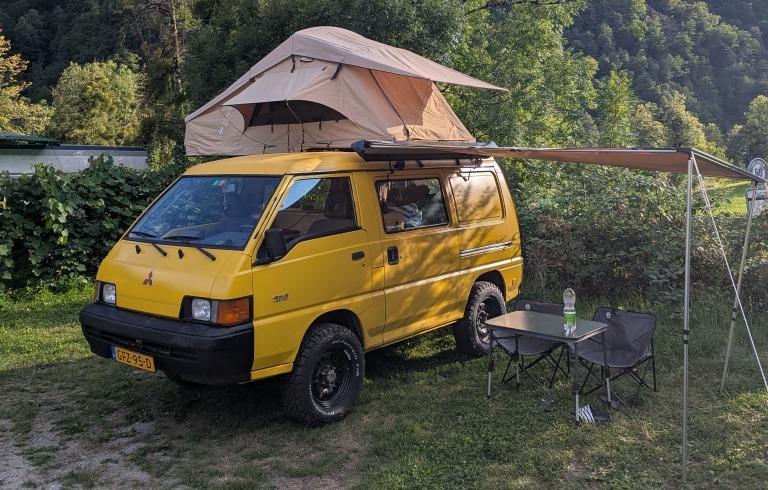
A rooftoptent is lovely to sleep in, but the real outdoor experience mainly takes place outside the tent. An awning creates exactly the space you often find yourself missing: a place to sit during rain or bright sunshine, a dry workspace to organise your gear, or simply a pleasant spot to cook.
The awnings from DTBD Outdoor are ideal for this. They are quick to set up and provide a surprisingly large covered area. Take the Penta 270 awning, for example, which offers no less than 12 m² of extra living space, or the more compact Quad awning with around 5 m² — perfect for those who want to set up quickly and carry as little weight as possible.
An awning instantly transforms your setup into an outdoor room:
-
You’ll stay dry during rain showers
-
You’ll have shade on hot days
-
You’ll expand your living space without having to leave your tent
-
Your belongings will stay protected
In short: an awning adds comfort where you use it most — outdoors.
2. What types of awnings are there?
DTBD Outdoor offers a range of awning solutions to suit different rooftoptent users.
A brief overview:
Separate awnings
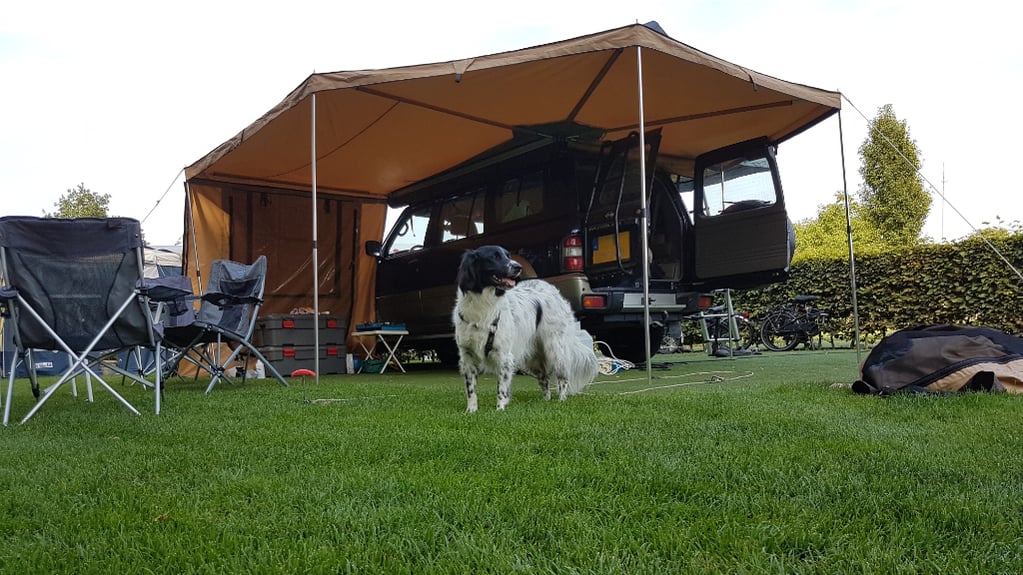
These are freestanding awnings that you attach right next to your car. They provide plenty of space and really complete your campsite. Examples include the Penta 180 and Penta 270, which are perfect choices if you spend a lot of time outdoors or are travelling with a group.
Compact quick-set awnings
The Quad awning is lightweight and quick to set up — ideal for shorter trips, weekend breaks or if you move around a lot. It’s ready in just a few minutes.
Sliding wall / awning combination
This is a clever hybrid solution. The DTBD Outdoor sliding wall is ideal if you don’t want to pitch a full groundsheet but do want to create a sheltered corner next to your car. Perfect for changeable weather or quick overnight stays.
.jpg?width=1023&height=767&name=2024%20Penta%20180%20Sand%20+%20Daktent%20(4).jpg)
3. Softshell vs. hardshell: why weight matters when expanding
One key advantage of softshell rooftoptents is often overlooked: they are lighter.
And that is precisely what makes them appealing to travellers looking to expand their setup.
Because a softshell tent takes up less of your car’s available roof load capacity, there is more room left for additional accessories such as larger awnings, inner tents, sliding walls or other extensions.
With hardshell rooftoptents, the situation is different. Due to their heavier construction, they often use up a large portion of the maximum roof load, meaning you’ll reach your limits more quickly when adding accessories.
In short: the lighter the tent, the more space you have left to expand your setup.
For travellers who want flexibility and plan to expand their camping setup in the future, a softshell tent therefore often simply offers more possibilities.
4. Self-supporting awnings: practical, but not always without compromise
Self-supporting awnings are rapidly gaining in popularity. This is understandable, as the concept is appealing: you simply unfold the awning and are immediately sheltered without having to set up any poles first. This seems ideal, particularly for short stops or quick overnight stays.
However, it is worth noting that this user-friendliness also has clear drawbacks.
The biggest drawback: weight
Because a self-supporting awning has to bear its own entire weight, a great deal of additional reinforcement is required in the frame and at the hinge points. As a result, these awnings are considerably heavier than traditional models.
This has a number of practical implications:
-
greater load on your roof racks
-
less suitable for cars with a low maximum roof load
-
often difficult to combine with heavier roof tents or additional accessories
For some vehicles, this simply rules out a self-supporting awning.
Self-supporting… but not always without support
A common misconception is that a self-supporting awning can always be used without legs. In practice, this is only true in calm weather conditions.
As wind loads increase, even self-supporting awnings must be:
-
supported by legs
-
secured with guy ropes
If you don’t do this, you risk damaging the awning, the mounting points or even your vehicle.
As is so often the case, the best awning isn’t necessarily the quickest to fit, but the one that suits your car, your travel style and your expectations.
5. What should you look out for when choosing an awning?
Choosing the right awning is about more than just personal taste. Be sure to consider the following:
Roof load & weight
Both roof tents and awnings must remain within the maximum load capacity of your car and roof racks. This is particularly important for large awnings such as the Penta 270.
Ease of setup
Do you move from place to place a lot? Then a quick-set-up awning such as the Quad is ideal.
Do you usually stay in one place for longer? Then a Penta awning with side panels offers more comfort.
Weather resistance
Buy an awning with sturdy fabric, good drainage and optional side walls. This way, you’ll stay dry in the rain and have shade in the sun.
Space requirements
Are you travelling with children or friends? Then more covered outdoor space is worth its weight in gold.
Travelling solo? Then a compact model is often sufficient.
Compatibility
Make sure your awning fits your roof tent type and your roof racks. Softshells offer the most flexibility in this regard.
6. Conclusion: with an awning, camping becomes a way of life
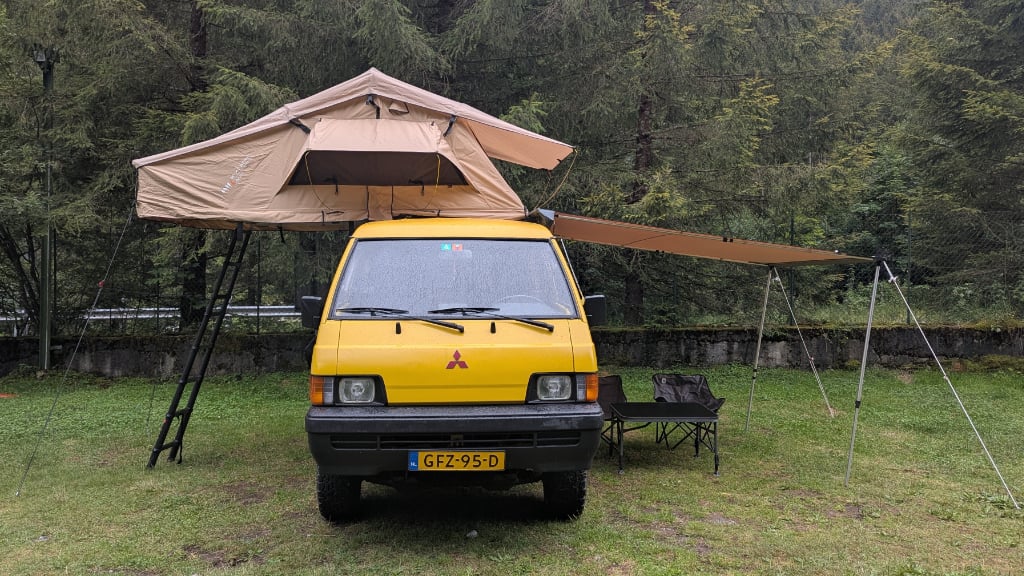
A rooftoptent provides the perfect place to sleep, but an awning completes your campsite. It’s where you cook, sit, read, work and relax. And the best part is: with softshell roof tents, you can expand your space endlessly — from spacious Penta awnings to handy sliding walls.
So, if you want to enhance your roof tent experience, the first thing to add is an awning. It makes every trip more comfortable, more practical and much more enjoyable.
With the right awning, camping isn’t just about sleeping…
but living, cooking, sheltering, enjoying yourself and being outdoors.